
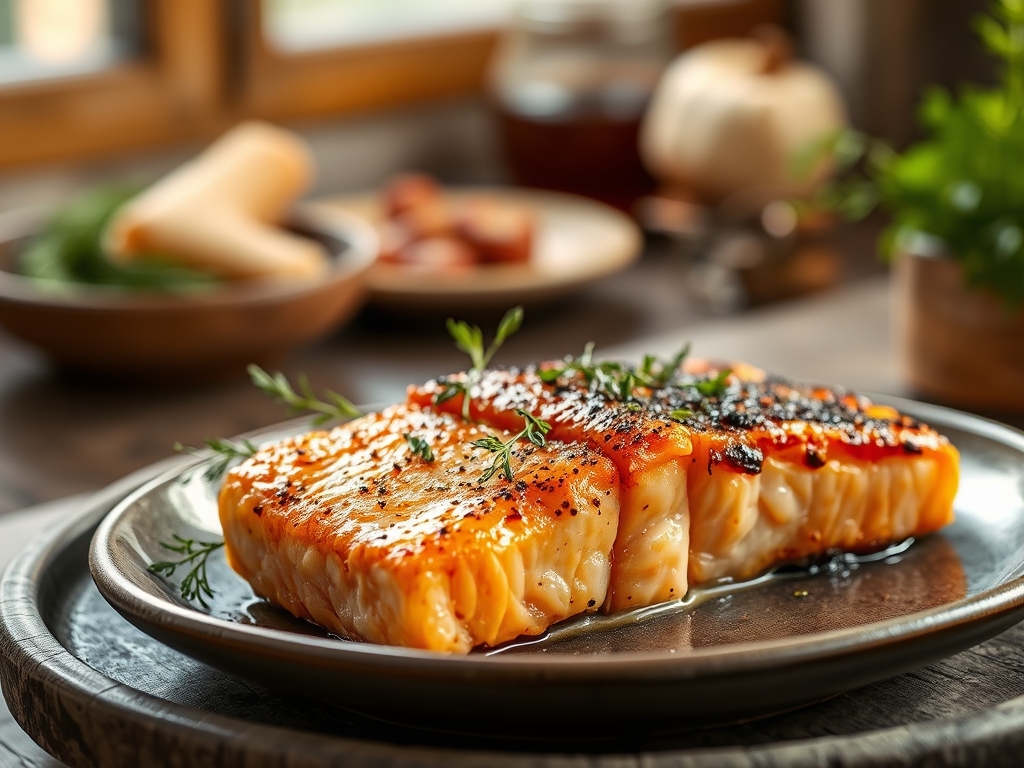
Imagine the sound of a high velocity fan whirring to life while the scent of toasted citrus and caramelized proteins begins to drift through your kitchen. There is a specific magic that happens when high heat meets cold fat. When you are hunting for simple salmon recipes air fryer methods offer a level of precision that a traditional oven simply cannot match. We are talking about skin so crisp it shatters like glass and a center that remains buttery and translucent. It is not just dinner; it is a lesson in thermodynamics. Most home cooks struggle with the paradox of salmon. They want that gorgeous crust but end up with a dry, chalky interior because they underestimate the power of convection. By using an air fryer, you are essentially using a miniature, hyper-efficient convection oven that circulates heat at a rate that triggers the Maillard reaction almost instantly. This creates a savory depth of flavor without the need for excessive oils. Grab your favorite apron and a glass of something crisp. We are about to turn your weeknight routine into a culinary laboratory where the results are consistently delicious.
The Gathers:
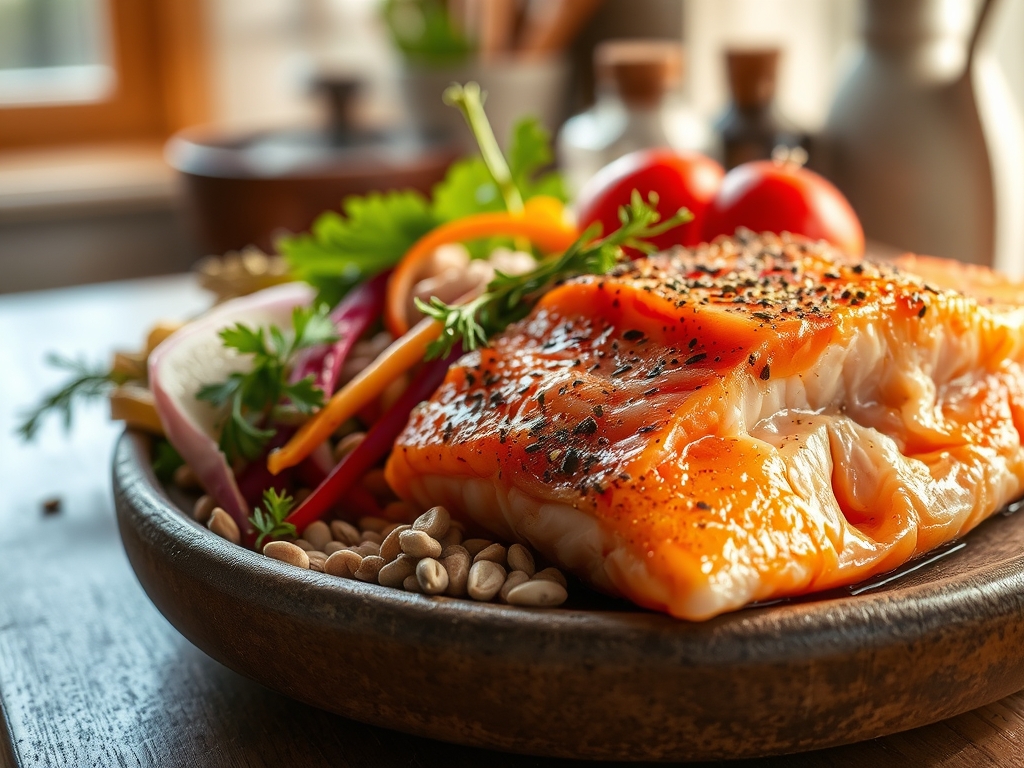
Before we engage the heating element, we must curate our mise-en-place with scientific intent. You will need six-ounce center-cut fillets; look for deep pigmentation which indicates high levels of astaxanthin, a powerful antioxidant. Ensure your salmon is at room temperature to prevent thermal shock. You will also need high-smoke-point fats like avocado oil or clarified butter. Avoid extra virgin olive oil here as its low smoke point will result in acrid flavors under high convection.
For the aromatics, gather fresh dill, a microplane for zesting organic lemons, and coarse Maldon sea salt. The salt is not just for flavor; its crystalline structure helps draw out surface moisture, which is the enemy of a crisp crust. If you are looking for smart substitutions, swap honey for maple syrup to achieve a more complex caramelization, or use coconut aminos if you are avoiding soy. Always use a digital scale to ensure your fillets are of uniform weight, which guarantees they will reach the target internal temperature simultaneously.
The Clock
Efficiency is the hallmark of a professional kitchen. The total active prep time for these hacks is exactly eight minutes. This includes the "Chef's Flow," a sequence where you season the fish while the air fryer preheats. Never skip the preheat phase. If you place cold fish into a cold basket, the proteins will stick to the metal as they slowly warm up.
The cooking duration fluctuates between seven and ten minutes depending on the thickness of the cut. However, the most critical part of the clock is the five-minute rest period. During this time, residual heat continues to cook the center of the fish while the muscle fibers relax, allowing the juices to redistribute rather than spilling out onto your plate.
The Masterclass
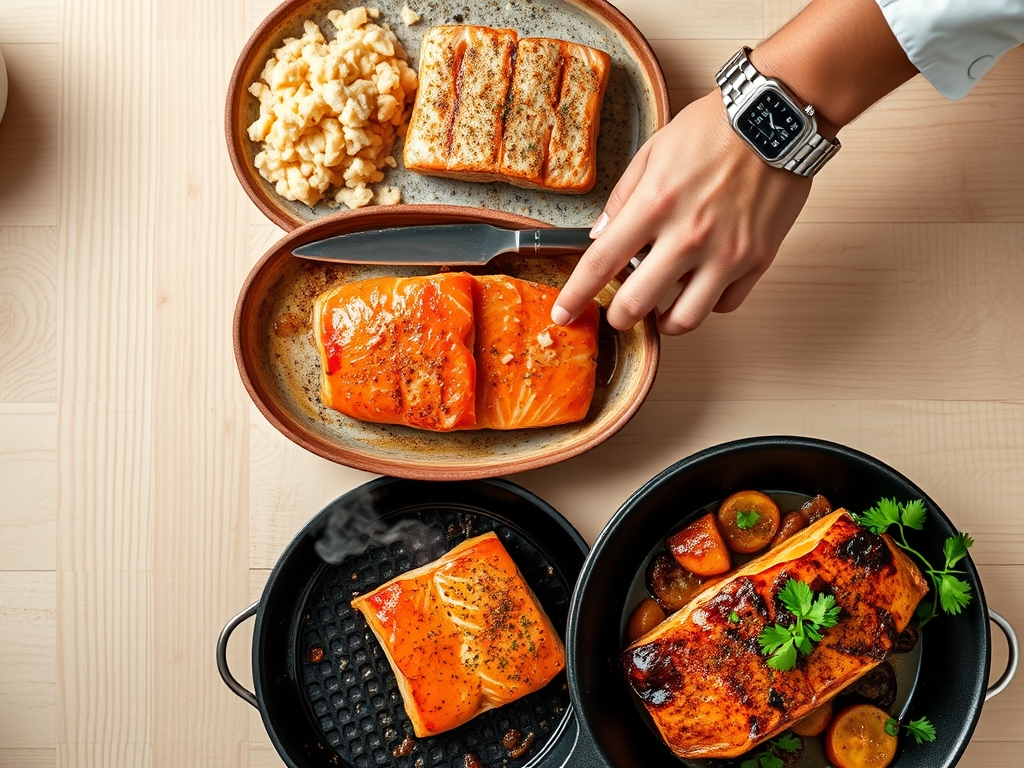
1. The Surface Desiccation Hack
Use a paper towel to pat the salmon bone-dry. Any moisture on the skin will turn to steam, preventing the crisping process. Pro Tip: This is known as surface tension reduction; by removing water, you allow the oil to create a direct thermal bond with the skin, accelerating the Maillard reaction for a crunchier texture.
2. The Parchment Perforation Hack
Line your basket with parchment paper, but poke small holes in it. This maintains airflow while preventing the fish from sticking. Pro Tip: Airflow is the engine of convection. By perforating the liner, you ensure the hot air can circulate underneath the fillet, preventing a "soggy bottom" caused by trapped steam.
3. The Emulsified Glaze Hack
Whisk your marinade until it is viscous and fully emulsified. A mixture of Dijon mustard and honey works best because the mustard acts as a stabilizer. Pro Tip: Emulsions coat the protein more evenly than thin liquids. This creates a protective barrier that seals in moisture while the sugars in the glaze undergo pyrolysis, creating a deep amber crust.
4. The Skin-Side Up Start
Begin the cooking process with the skin facing the heating element for the first four minutes. Pro Tip: This allows the subcutaneous fat to render quickly. As the fat melts, it essentially deep-fries the skin from the inside out, leading to that coveted "crackling" effect.
5. The Citrus Shield Hack
Place thin slices of lemon underneath the salmon. Pro Tip: This acts as a thermal buffer. The lemon slices protect the delicate flesh from direct contact with the hot basket, while the heat causes the citrus oils to infuse upward into the fish, adding a piquant brightness.
6. The "Mayo" Moisture Hack
Apply a thin layer of mayonnaise over the top of the fillet before seasoning. Pro Tip: Mayonnaise is an egg-based emulsion. Under high heat, the proteins in the egg brown beautifully, while the oil provides a fat cap that prevents the lean salmon proteins from denaturing too quickly and becoming tough.
7. The Ice Cube Steam Hack
If you are cooking thicker fillets, toss a single ice cube into the bottom of the air fryer drawer. Pro Tip: This creates a burst of flash-steam. The steam keeps the exterior of the fish supple while the interior reaches the safe temperature of 145 degrees Fahrenheit, preventing the "white albumin" from leaking out.
8. The Carryover Heat Pull
Remove the salmon when the internal temperature hits 135 degrees Fahrenheit on a digital thermometer. Pro Tip: This accounts for thermal carryover. The internal temperature will rise by approximately 10 degrees while resting, ensuring the salmon reaches a perfect medium-rare rather than overcooking into a dry state.
The Deep Dive
From a nutritional standpoint, salmon is a powerhouse. A single six-ounce serving provides roughly 34 grams of high-quality protein and is rich in Omega-3 fatty acids. If you are following a Keto lifestyle, double down on the fats by using a compound butter. For a vegan alternative, these same air fryer techniques work beautifully with firm tofu or "watermelon steaks," though the cook times will vary.
If you run into trouble, don't panic. If your salmon is sticking, use a bench scraper or thin tongs to gently lift it; next time, ensure your basket is properly seasoned with oil. If the exterior is burnt but the inside is raw, drop your temperature by 25 degrees and increase the time. This indicates that your "delta-T" (the temperature difference between the air and the food) is too high. For meal prep, never microwave your leftovers. Instead, use the air fryer at 300 degrees for three minutes to aerate the skin and gently warm the fats without overcooking the protein.
The Wrap-Up
Mastering simple salmon recipes air fryer style is about more than just a quick meal; it is about understanding how air, heat, and fat interact to create culinary perfection. By focusing on surface moisture, temperature control, and the resting phase, you can produce restaurant-quality results in less time than it takes to order takeout. Go ahead and experiment with different glazes and aromatics. Your air fryer is your most loyal sous-chef.
The Kitchen Table
How do I prevent the white stuff from appearing on salmon?
That white substance is albumin, a protein that pushes to the surface when salmon cooks too fast. To prevent it, cook at a lower temperature or use a brine to gently denature the surface proteins before air frying.
Can I cook frozen salmon in the air fryer?
Yes, but for the best texture, use the "defrost" setting or cook at 350 degrees for 12-15 minutes. Note that you will not achieve the same level of crispness as you would with fresh, dry fillets.
What is the best oil for air frying salmon?
Use oils with high smoke points like avocado, grapeseed, or light olive oil. These fats can withstand the 400-degree convection heat without breaking down, ensuring your salmon tastes clean and remains heart-healthy.
How do I know when the salmon is done without a thermometer?
Gently press the top of the fillet with a fork. If the flesh flakes easily along the natural white lines (the fat layers), it is ready. The center should still look slightly translucent and feel firm but not hard.